
 admin
admin 
Choosing the right gas detection technology is critical for ensuring safety, accuracy, and operational efficiency in industrial and environmental applications. With multiple sensor types available, two of the most widely used technologies today are infrared (IR) and electrochemical gas sensors. Both have their strengths and limitations, and understanding how they differ can help you make an informed decision for your system or project.
For instance, modern industries often rely on advanced technologies like the ch4 sensor to detect methane and other gases with precision. But how does an infrared-based CH₄ sensor compare to an electrochemical one? Let’s explore the science, performance, and practical applications of each.
How Infrared Gas Sensors Work
Infrared (IR) gas sensors, also known as NDIR (Non-Dispersive Infrared) sensors, detect gases by measuring the absorption of infrared light at specific wavelengths. Every gas has its unique infrared absorption spectrum. When IR light passes through a gas sample, part of it is absorbed by the target gas molecules. A detector measures this absorption, and the difference between the emitted and received light indicates the gas concentration.
Key advantages of infrared sensors:
- High accuracy and stability: IR sensors are unaffected by oxygen concentration or humidity and rarely experience drift.
- Long lifespan: Since there are no consumable components, IR sensors can operate reliably for years.
- Fast response: They offer real-time monitoring with quick detection of leaks or concentration changes.
- Low maintenance: No need for frequent calibration or replacement of chemical cells.
These features make infrared sensors ideal for detecting gases like methane (CH₄), carbon dioxide (CO₂), and hydrocarbons—especially in industrial safety systems, HVAC controls, and environmental monitoring.
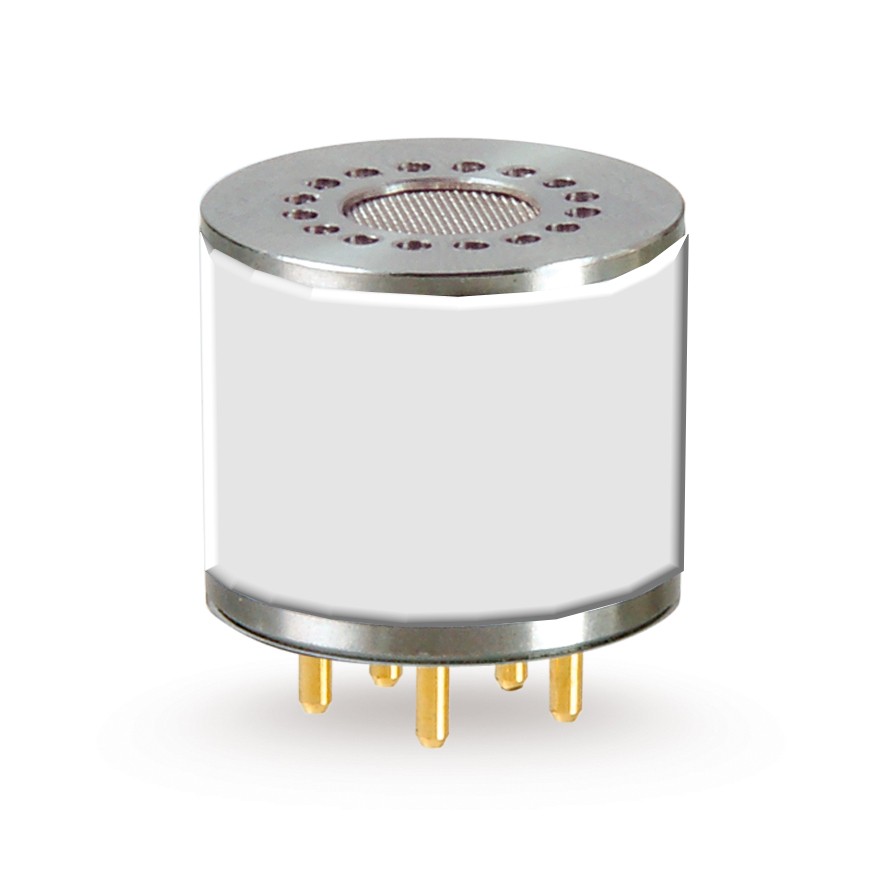
How Electrochemical Gas Sensors Work
Electrochemical sensors, on the other hand, rely on chemical reactions to detect gases. They consist of electrodes immersed in an electrolyte. When the target gas diffuses through a permeable membrane and reacts with the electrode surface, it generates an electrical current proportional to the gas concentration.
Key advantages of electrochemical sensors:
- High sensitivity: They can detect very low gas concentrations, often down to parts per billion (ppb).
- Compact and cost-effective: Electrochemical sensors are typically smaller and more affordable than infrared alternatives.
- Well-suited for toxic gases: Ideal for detecting gases such as CO, NO₂, H₂S, and O₃.
However, because the electrochemical process consumes the reactive components of the sensor, these sensors have a limited lifespan—often between 1 to 3 years—and require periodic calibration to maintain accuracy.
Comparison: Infrared vs. Electrochemical Sensors
| Feature | Infrared Sensor | Electrochemical Sensor |
|---|---|---|
| Detection Principle | Light absorption (NDIR) | Chemical reaction |
| Target Gases | CH₄, CO₂, hydrocarbons | CO, H₂S, NO₂, O₃ |
| Lifespan | 5–10 years | 1–3 years |
| Accuracy | High, stable over time | High, but may drift |
| Maintenance | Low | Moderate to high |
| Response Time | Very fast | Moderate |
| Cross-sensitivity | Minimal | Possible |
| Cost | Higher upfront | Lower initial cost |
From this comparison, infrared sensors stand out for long-term reliability and stability, while electrochemical sensors excel in detecting low levels of toxic gases where extreme sensitivity is required.
Which One Should You Choose?
Your choice depends on your application’s needs:
- For methane or carbon dioxide detection, an infrared-based ch4 sensor is the superior option due to its accuracy, low maintenance, and resistance to environmental interference.
- For toxic or reactive gases like carbon monoxide or nitrogen dioxide, electrochemical sensors remain more practical and cost-efficient.
In many industrial systems, both technologies are used together—infrared sensors for flammable gas monitoring and electrochemical sensors for toxic gas detection—to create a comprehensive safety network.
The Future of Gas Sensing
As IoT and smart monitoring systems evolve, hybrid sensor networks that combine infrared and electrochemical technologies are becoming more common. Advanced calibration algorithms, wireless communication, and AI-driven analytics now allow industries to predict and prevent gas leaks before they occur.
Manufacturers continue to innovate by improving stability, miniaturization, and environmental resistance, ensuring that both infrared and electrochemical sensors remain key players in the next generation of safety and environmental systems.
Conclusion
Both infrared and electrochemical gas sensors play vital roles in protecting people, property, and the environment. Choosing the right one comes down to understanding your gas type, operating conditions, and maintenance capabilities.
If your goal is long-term stability, accuracy, and minimal upkeep, infrared gas sensors—especially for methane and CO₂ detection—are the clear choice. For applications where ultra-low detection levels of toxic gases are needed, electrochemical sensors still hold a strong advantage.
In the end, the most effective solution may not be about choosing one over the other—but about using both strategically for complete safety coverage.