 admin
admin 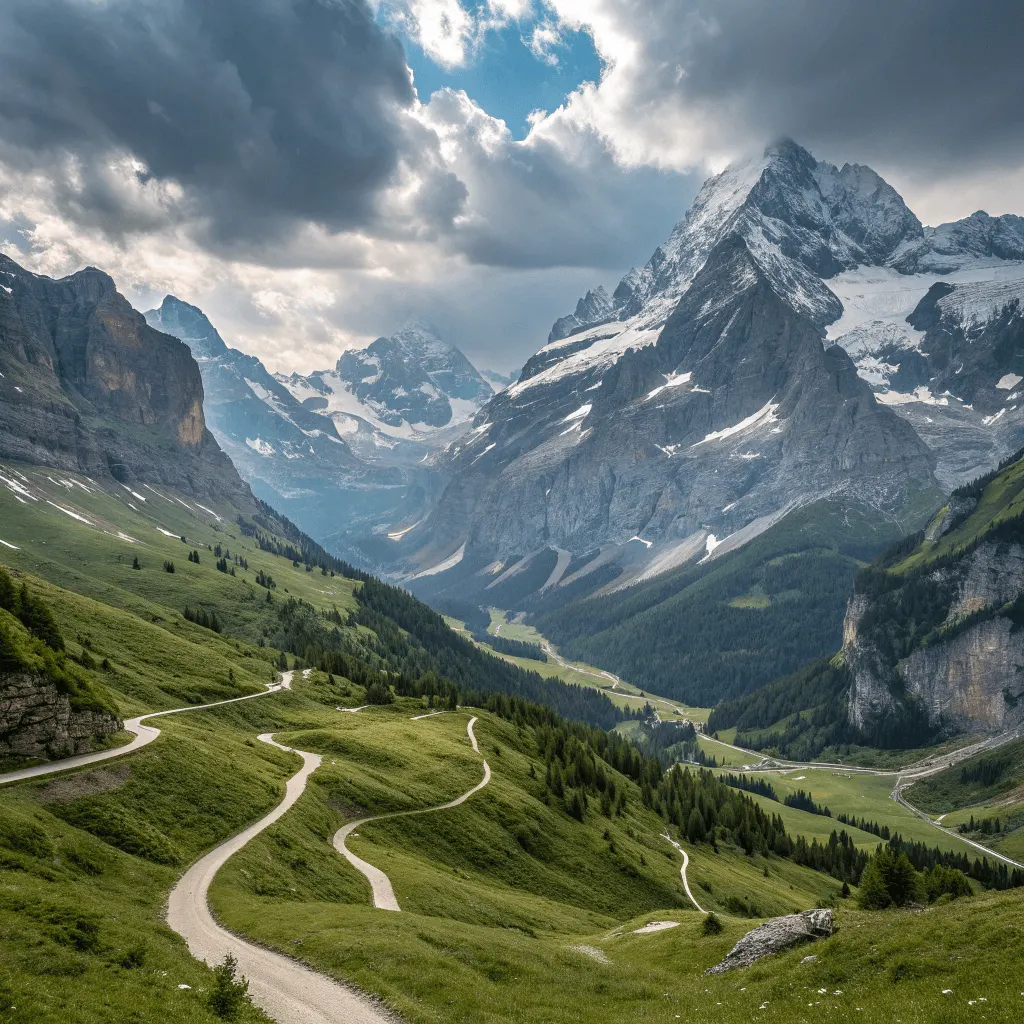
There is no mountain range like the Alps anywhere else in the world. The Alps run through eight countries – France, Switzerland, Austria, Italy, Germany, Slovenia, Liechtenstein and Monaco – meaning that if you get the chance to cross international borders in your lifetime, this is the place to do so, as you can travel from valley to valley and high pass to low pass while appreciating the distinct beauty of various locales connected geographically but separated culturally and culinarily. Whether by hiking, driving or taking a panoramic train journey between peaks and pastures, crossing international borders in the Alps is commonplace – when it shouldn’t be – and easy when a traveler knows where they want to go and what they want to do to connect the dots.
The Internationality of the Alps – It Feels Like You’re in Different Countries!
One of the coolest things about the Alps is how different each country feels, even though they’re just across a mountain ridge. Private transfer from Geneva to Val Thorens makes it easy for travelers to experience these contrasts firsthand as they journey between some of the region’s most iconic ski destinations. In France, you have the majestic mountain peaks above chic ski resorts and quaint towns. In Switzerland, you have postcard-perfect sights with organized order and peace. In Austria, there are rolling valleys and baroque buildings, while in Italy’s Dolomites, you get treated with dramatic limestone peaks and captivating sunsets.
It makes traveling through multiple countries feel like a singular culture of discovery all part of the same journey by unraveling transitions like this. All that’s needed is a passport for a day to cross from fondue to schnitzel to polenta – French to German to Italian – and stunning granite peaks to rolling meadows. Each border you cross digs deeper into the alpine psyche of your travel, for it’s not as fragmented of a culture as perhaps other parts of Europe – an entirely unique identity is found within the mountains.
International Access to the Alps by Trains of Easy Borders
The best way to experience multiple countries in the Alps is by train, which connects a lot of regions easily with scenic views along the way. Europe’s interconnected railways make traveling easy, green, and extraordinarily picturesque. The Glacier Express travels between Zermatt and St. Moritz, crossing valleys and bridges between extraordinary views, while the Bernina Express takes travelers right into Italy with expansive views of turquoise lakes, glaciers and charming mountain towns.
For those in the crosshairs of Austria and Germany, the Tyrol train is an unparalleled view over fields filled with cows and wrapped in mountain views. Mont Blanc Express travels from Chamonix to the Swiss town of Martigny, connecting forests and waterfalls along the way. Cross borders between train stops as these connect towns without need for driving and a true appreciation of what’s all around.
Explore the Alps Internationally by Foot!
Few things are as magical as crossing borders by foot – especially for those who are hikers. The Alps are home to many long-distance trails that can take you literally from one country to the next! The Tour du Mont Blanc, for example, is a popular route that connects travelers through Switzerland, France and Italy with a beautiful loop well worth the time. Each day brings new landscapes – fields with wildflowers, then rocky peaks one day and charming towns on another – and evenings filled with cozy mountain huts and refuge.
The Via Alpina is an even bigger network that spans thousands of kilometers across borders – and while it is broken up into sections along the way, it offers international travelers the opportunity to hike from Slovenia to Italy, from Austria into Germany or from Liechtenstein into Switzerland. These trails help instill a connection with both land – but also where borders are mere ideology through nature as the common language where even nature spirits spoke differently along borders but share equally in importance all across the region.
Blending Borderless Travel with Curvy Passes and Scenic Drives
Driving through the Alps is the best way to access remote valleys, hidden lakes, and pastures up to high mountain passes that otherwise would not be accessible by train or bus. Many mountain passes are border crossings, serving as the international path between those countries.
For instance, France’s Col du Petit Saint-Bernard flows easily into Italy. The Grossglockner High Alpine Road branches through Austrian territories to connect to other areas in the country, exposing passengers to charming glacial views, and the Splügen Pass in Switzerland transitions into Italy through stone villages and forests as it travels downhill. Traveling through each country is more than a means to an end; the drive itself is a massive part of the experience, with switchbacks, lookout points and small alpine villages to admire along the way.
Glimpse Cultural Differences at Each Border Crossing
Each border crossing is an introduction to a new country with distinctly different architecture, traditions, and hospitality. For instance, in Switzerland, wooden chalets comprise most of the mountain villages; in Austria, onion-domed cathedrals pop against rolling hills; in Italy, pastel-colored homes with active piazzas on mountain roads welcome you; in France, rustic stone home cottages with markets featuring homemade jam and cheese exude quintessential alpine charm.
The way people greet you, what language is being spoken in the local café, and the meals served at rustic mountain huts all change slightly from one border to the next. Thus, what you initially consider a singular experience becomes more nuanced; you step across borders continually and find new country-specific approaches to what could have otherwise been homogenized within the Alps.
Easy Travel Across Borders with Access to New Countries and Logistics
Fortunately, crossing these borders is easier than ever in the 21st century thanks to the Schengen Agreement which allows free travel between most European countries. In many areas, borders are unmarked; it’s not uncommon to feel as if you’ve crossed over from one country to another without making any effort – especially on hiking trails and rural backroads.
Yet a little effort goes a long way, too: knowing where euros are not accepted (Switzerland and Liechtenstein exclusively use Swiss francs for their currency), train timetables between countries and even basic recognition of some languages goes a long way in enhancing the travel experience. Should you choose to rent a car, extra insurance for border crossing may be required although it’s generally an effortless task. Buses and cable cars are also familiar across borders making public transportation an equally reliable option to get in and out of regions stress-free.
A Taste of Multi-Country Culinary Culture
Another beautiful thing about traveling through multiple Alpine countries is experiencing the culinary cultures. French raclette and tartiflette (and Savoie whites to wash it down) will give way to Swiss fondue, rösti, and chocolate by the pound. In Austria, visitors will partake in schnitzel, Kaiserschmarrn, goulash, and potato-heavy dumplings while Italy’s northern provinces will showcase creamy polenta, pasta, and cheese made with alpine herbs.
Transitioning from one country into another means seamlessly digesting one’s way through popular traditions. Meals tell the history of a place and its geography as a central characteristic. Thus, from hut to osteria, the Alps shall nourish the traveler spirit and body.
The Fun of a Cross-Country Ski Experience in Winter
In winter, the Alps become one of the world’s largest ski playgrounds – many which are connected and cross-country. The Portes du Soleil connects France and Switzerland with 600+ kilometers of slopes, creating access where travelers can ski from one country to another without even realizing what they’ve done. In the Zillertal/Tyrolean area, ski passes provide access to sides in Austria and Italy.
Thus, the fun of skiing cross-country – and seemingly limitless access – adds a fun element to one’s alpine adventure: breakfast in one country, lunch in another and après-ski cocktails back where one started. Skiing cross-country makes the Alps feel like one big, expansive, connected playground of snow, sights, and seamless culture.
Cross-Country Itinerary Suggestions for your Travels
The best travel itineraries for cross-country excursions rely upon personal itineraries based on sights that are more or less interesting. Train rides that are scenic may be more compelling than hikes. Some travelers appreciate culinary stops more than vertical climbs, while other adventurers have their hearts set on winter sports.
Thus, many established routes create circular patterns beginning in one country that stretch across two or three more, ultimately starting in hot spots like Chamonix or Innsbruck and returning through less-traveled spots like Arosa or Cortina d’Ampezzo.
Flexible time frames support discovery and exploratory approach – for who knows what travelers may find along the way? A hidden café in the mountains? A path less traveled? A peaceful lake not noted in a travel book?
For those willing to take their time – and schedule their recommendations into a less rigid road map – the Alps reward wanderers with more than just what the guidebooks tell them.
Cycling Paved Panoramic Routes Across Borders
For travelers who prefer two wheels instead of four, the Alps possess an impressive array of cycling routes that are easily accessible and cross international lines naturally. From the gentler paved paths of the Via Claudia Augusta connecting Germany, Austria, and Italy to the more challenging slopes of the French and Swiss mountains, cyclists are treated to some of the region’s greatest views.
There’s something to be said about crossing borders on a bike; it provides a real sense of existence between two countries, where one valley boasts a German-speaking village and the next an Italian one, or where different architectural styles blend between mountain passes. The region boasts extensive bike paths and e-bike rentals, and cyclist-friendly inns guarantee a touring experience throughout the Alps that is easy and accessible for slow-paced travelers and avid bikers alike.
Visiting Border Villages Away from Tourist Hotspots
Some of the most valuable cross-border experiences are found in small, border villages situated between high valleys or next to natural borders. Tende at the French-Italian border, Samnaun at the Austria-Switzerland border, or Tarvisio connects Italy, Austria, and Slovenia, resulting in culturally rich towns and villages that boast influences from both sides across history for centuries.
It’s not uncommon to hear two languages spoken on the same street, spot cultural nuances distinguishing them from what typically would go into play on one side versus the other, and access dishes and traditions from either country (or both!). These towns boast quiet personalities that reflect their alpine surroundings yet are welcoming – discovering them on your terms reveals a side to the Alps that most mainstream tourists never see.
Enjoying Nature Parks that Span Borders
For some of the best transnational parks exist across the Alps where nature does not see human-created border crossings. The Berchtesgaden-Salzburg Alps region of Germany and Austria; the Dolomiti Friulane-Triglav nature corridor connecting Italy and Slovenia; and the Mont-Blanc protected area between France, Switzerland, and Italy span natural ecosystems and geologic formations that transcend borders.
Visiting these parks allows travelers to experience wildlife migrations, pristine views, and geological wonders that flow seamlessly from one country into another with no interruption. Marked trails of varying degrees, multilingual information centers with park history and best practices courtesy of joint nature preservation efforts make these regions ideal for eco-conscious travelers seeking to appreciate nature on their journey. One hike could result in glaciers, meadows, forests, and lakes without even realizing you’re crossing into different parks within different countries’ jurisdiction.
Alpine Spirit of Multifaceted Countries in Respect to Local Culture
Crossing borders in the Alps is more than landscapes. It’s cultural diversities. Each country has its contributions: craft beers from Switzerland, folk music from Austria, culinary arts and hospitality from Italy, and complex culinary endeavors from France. Many towns hold local events to celebrate the region – shepherd festivals, wine seasons, small town markets, artisan events. This is how travelers connect with the culture on a more personal level.
Traditions celebrate the flora and fauna and the people who produce artifacts but also serve as entertainment for those passing through. While they may differ from valley to valley, they share commonalities celebrating nature, communities, and artisanship on both sides of the Alps. Thus, by spending time in multiple countries, one better understands how and why such traditions exist – and the similarities or differences that may exist throughout the border. It reminds us that we’re all interconnected yet diverse in our niche ways.
Conclusion
Therefore, there is no other place like crossing multiple countries in the Alps for adventures in nature and cultural experiences. Landscapes blend into one another, borders feel non-existent as people traverse rugged terrains only to get to the other country and marvel at what each side has to offer. Whatever language is spoken or flavor is tasted can shift at any point, but somehow, it feels familiar by being interconnected through one expansive mountain range.
Whether walking, taking a train, car, or even skiing across nations like the border means nothing, this is where international travel expands one’s appreciation of nature and gives value to one of the most spectacular mountainous regions in the world.